




Listen to the Masters Audiocasts


Keats

Christopher Bamford reads FROM A LETTER OF SUNDAY, DECEMBER 21 1817 and ODE TO PSYCHE

By JOHN KEATS

5:22 playing time

'Negative Capability' is a phrase much written about - the great poet John Keats being its author in his letter to his brothers Thomas and George in 1817. The letter relates a new method of poetic expression whereby the writer removes his own thought process and lets the true nature of beauty speak for itself unimpeded by intellectual interpretation.

The book Negative Capability by Nathan Scott describes how the phrase is similar in effect to the philosophical concept of Gelassenheit of Martin Heidegger where he states the spirit of disponibilité before What-Is which permits us simply to let things be in whatever may be their uncertainty and their mystery." Compare this with Keats - "I mean Negative Capability, that is when man is capable of being in uncertainties, Mysteries, doubts, without any irritable reaching after fact and reason."

This is also similar to the Buddhist concept of Suchness where one is observant of the reality of the moment free of the inclination to define and categorize; a state of realizing the truth, beauty and transient quality of life - "Beauty is truth, truth beauty that is all / Ye know on earth and all ye need know" - Ode on a Grecian Urn, lines 49-50 . Such focus leads to a non-dualistic consciousness (Samdhi) where the subject experiencing is one with the object being experienced. Mind is awareness and is a part of all that it is aware of. As Keats writes in the letter "beauty overcomes every other consideration, or rather obliterates all consideration."

This is a transcendent state experienced by adepts, philosophers, and poets. The question beckons are these vocations one and the same. The essential matter is their works and teachings benefit the reader and the world.

By entering this state Keats sought to capture the eternal moment in all its beauty and his poems take on the same quality of beauty as that which he is revering. He describes this state of selflessness in his forest vision in Ode to Psyche:

So let me be thy choir, and make a moan
Upon the midnight hours;
Thy voice, thy lute, thy pipe, thy incense sweet
From swinged censer teeming;
Thy shrine, thy grove, thy oracle, thy heat
Of pale-mouth'd prophet dreaming.

Yes, I will be thy priest, and build a fane
In some untrodden region of my mind,
Where branched thoughts, new grown with pleasant pain,
Instead of pines shall murmur in the wind:

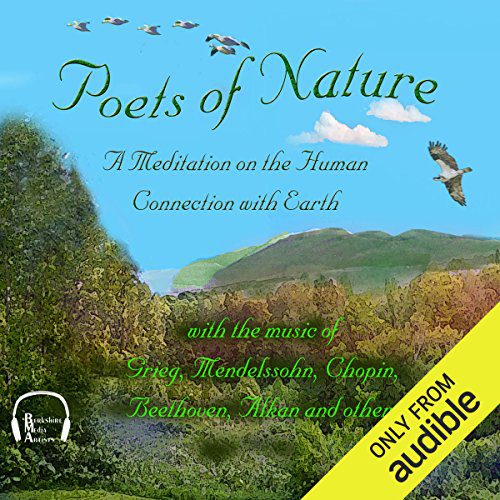
Listen for Keats' I STOOD TIP-TOE UPON A LITTLE HILL - Places of nestling green for Poets made on BMA's upcoming release Poets of Nature as well as Christopher Bamford's Goethe in Marienbad.

Chris Bamford

Chris Bamford (narrator) is the editor-in-chief of SteinerBooks and Lindisfarne Books (See Behind the Scenes). He lectures and teaches internationally, has written extensively on the Western esoteric traditions and is a Fellow of the Lindisfarne Association. His books include Green Hermeticism - Alchemy and Ecology, An Endless Trace - The Passionate Pursuit of Wisdom in the West, The Voice of the Eagle - The Heart of Celtic Christianity, Celtic Christianity - Ecology and Holiness, and Homage to Pythagoras - Rediscovering Sacred Science.

Copyright © 2010 BMA Audio. Hosted & Designed by Tom Stier. Powered by Zen Cart